AAP-CA3 training focuses on strong relationships, practical skills, and ongoing support because lasting impact starts with empowered staff.
Practical Application and Learning in a Judgment-Free Zone:
Staff engage in activities that provide opportunities to practice new strategies, build confidence, and strengthen peer connections.
Real Stories.
Real Skills.
We use simulation and story-based learning that feature real-life scenarios and interviews with professionals to help staff absorb and apply skills that matter in the field.
Learning That Fits Your Schedule:
We understand that staff are busy balancing service delivery, documentation, and administrative tasks. Our short, powerful microlearning videos deliver key insights in bite-sized formats, making it easy to learn and apply new skills on a schedule that works for them.
Build Strong Supervisor-Staff Relationships:
The connection between supervisors and staff is essential for program success. Our trainings bridge content with supervision to bring content into practice.
Continuous Growth Beyond the Session
Learning doesn’t stop when the session ends. Our post-training activities and supervisor-led discussions keep the momentum going, helping you build a culture of continuous growth and support across your organization.
Start learning today and empower your team and elevate your impact!
AAP-CA3 provides a wide range of engaging blended courses designed to elevate your team’s skills and effectiveness. Tailored specifically for family support professionals in home visiting, early intervention, child welfare, and more, these courses offer interactive components and practical assignments to ensure real-world application. Plus, with expert guidance during supervision, you’ll maximize your learning. We highly recommend undertaking these courses after your family support model training to truly empower your team and make a lasting impact.
Screening Tools
Self-Paced
Screening for Challenging Issues
Prerequisite: None
Want to feel more confident screening and addressing sensitive topics with the families you serve?
This self-paced course explores challenging issues commonly encountered in family support settings, including intimate partner violence and mental health concerns. It emphasizes the importance of screening in prevention programs and the critical role professionals play in supporting families through these challenges. The course also introduces the Stages of Change (Transtheoretical Model) to support staff in understanding parental readiness to address challenging issues. The course is the prerequisite course to specific screening tools (e.g. GAD7, PHQ9, RAT).
Prerequisite:"Screening for Challenging Issues" course is a pre-requisite for all screening tools. This training does not replace training on perinatal mental health.
Looking to strengthen your ability and confidence to identify and respond to anxiety in the families you serve??
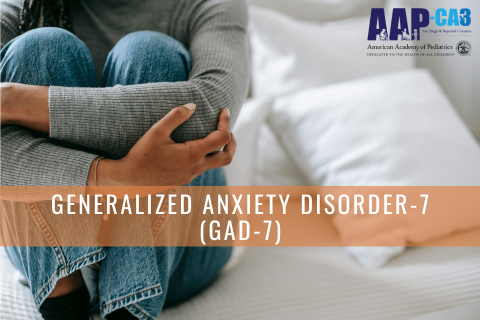
This self-paced course introduces the Generalized Anxiety Disorder 7-item (GAD-7) questionnaire, a validated screening tool used to identify symptoms of anxiety in women. Although at least one in five women will experience perinatal anxiety, many family support programs and medical offices only screen for depression. Widely implemented in family support programs, the GAD-7 helps professionals recognize early signs of anxiety and connect individuals to appropriate care. Participants will learn how to administer, score, and interpret the tool effectively within their practice.
Looking to strengthen your ability to identify and respond to depression in the families you serve?
This self-paced course introduces the Patient Health Questionnaire-9 (PHQ-9), a validated, nine-item screening tool used to detect symptoms of depression. Widely adopted in family support programs and often required by funders, the PHQ-9 helps professionals identify early signs of depression and support timely intervention. Participants will gain practical knowledge on how to administer, score, and interpret the tool within their practice.
Looking to strengthen your ability and confidence in identifying and responding to intimate partner violence in families?
Discover how to use the Relationship Assessment Tool (RAT)—a validated, ten-item questionnaire designed to screen for intimate partner violence. Formerly known as the Women’s Experiences with Battering (WEB), this tool is widely used in family support programs and is often required by funders.
This course provides practical guidance on administering the RAT and understanding its role in identifying and supporting women experiencing intimate partner violence.
AAP-CA3 offers courses to build your team’s skills in implementing evidence-based frameworks and curriculum. Live courses include live Zoom sessions with a certified trainer and self-paced content in a learning management system. These courses are designed for family support professionals in home visiting, early intervention, child welfare, and beyond.
Curriculum & Frameworks
Self-Paced
HOPE Framework
Ready to shift your mindset from what's wrong to what's strong?
The Healthy Outcomes from Positive Experiences (HOPE) Framework introduces a transformative, strength-based approach to working with children and families. Led by a certified HOPE trainer, this interactive training explores the science behind positive childhood experiences and their impact on lifelong health and well-being. Participants will dive into the 4 Building Blocks of HOPE, examine the connection between HOPE and health equity, and learn practical strategies for shifting mindsets and integrating HOPE into everyday practice.
Want to help parents build strong, lasting bonds with their babies?
Baby Steps is a facilitator-led series of seven group meetings designed to help parents build strong, nurturing relationships with their infants—from newborn to 15 months (pre-walking). Rooted in early childhood development research, this training emphasizes the importance of secure parent-child bonds in fostering trust, emotional security, and lifelong learning. In this training, you will familiarize yourself with the Baby Steps curriculum to prepare to support parent-child relationships in your community.
Looking to expand your tool kit with a curriculum that focuses on building stronger connections and offers more than just activities?
Baby TALK Curriculum Core offers an in-depth exploration of the research-informed curriculum designed for intensive home visiting and early childhood programs. This training provides foundational developmental insights from the perspectives of the child, the caregiver, and the professional. Participants will engage with the Baby TALK Critical Concepts, practice key strategies, and learn how to effectively use and adapt the curriculum to meet diverse family needs. The course includes interactive case scenarios and a live Q&A session with experienced trainers.
Want to develop confidence and gain tools to support families facing intimate partner violence or adverse childhood experiences.
Connected Parents, Connected Kids (CPCK) training empowers staff and parents to have easier, more confident conversations about Intimate Partner Violence (IPV) and Adverse Childhood Experiences (ACEs).
This comprehensive training introduces the CUES Framework (Confidentiality, Universal Education & Empowerment, and Support) and CPCK Safety Cards.
Interactive activities build participants' comfort and confidence in using these tools to support families effectively.
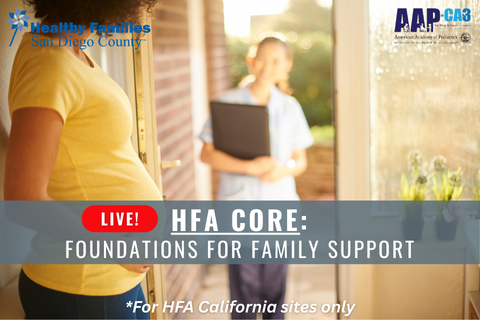
Healthy Families San Diego County offers Model Training for California Affiliates As a trusted leader among California HFA programs, Healthy Families San Diego County (HFSDC) is proud to offer comprehensive core training for staff across the state. Our experienced trainers understand the unique challenges of California HFA sites, including managing multiple funding streams, databases, and complex requirements. By enrolling with HFSDC, your team gains access to expert knowledge, tailored support, and a detailed printed manual sent directly to you. Choose HFSDC for expert training that empowers your staff to succeed and ensures your program’s lasting impact.
Once you enroll in a course or submit the registration form, you will be accepting the Training and Attendance Policy terms and conditions listed below.
Cancellation Policy
Trainees or their Supervisor/Manager must email AAP-CA3 as soon as possible about any changes in attendance.
Fees for cancellation:
15 days or more before training: No fee.
0–14 days before training: Full training fee will be charged.
For self-paced training only: the site may choose to allocate credit to a future training of equal or lesser value
Attendance Policy
Staff must attend all training sessions—whether virtual, in-person, or hybrid.
To receive a certificate, staff must be present for every session and complete every module in full.
If a live session is missed:
Staff need to retake the entire training.
Site must pay the full training cost again.
No refunds or credits will be issued for missed sessions.
Emergencies
If an emergency happens, please contact AAP-CA3 immediately.
AAP-CA3 will work with the site to see if any flexibility is possible.
Live/Hybrid Training Disclaimer:
AAP-CA3 reserves the right to cancel or reschedule due to unforeseen circumstances, including low enrollment. If this happens, registrants will be notified by email and a credit or refund will be offered on a case by case basis.
Self-Paced Training Disclaimer:
AAP-CA3 is not responsible for monitoring training progress. We recommend supervisors provide the
staff member with a timeline for completion. Supervisors may request a training progress report by contacting Shelby Smith (ssmith@aapca3.org).
Training Completion Disclaimer:
AAP-CA3 is not responsible for tracking and maintaining learner records. Staff are responsible for downloading certificates after the completion of courses. If staff resign, their user data will be removed.